
Bearing maintenance and lubrication are critical for ensuring smooth machinery operation and reducing downtime in industrial applications. Commercial bearings play a key function in making sure easy equipment operation and minimizing downtime. In our enjoy, untimely bearing failure is regularly prompted no longer by product defects however through poor renovation and lubrication practices.
Right care, regular inspection, and accurate lubrication techniques can extensively increase bearing lifestyles, lessen operational prices, and enhance device performance. This manual explains realistic protection strategies and lubrication techniques that help industries maximize bearing performance.
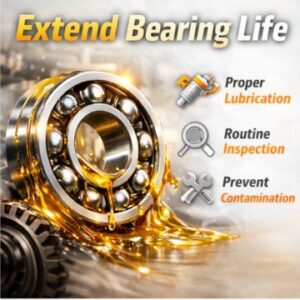
Why Bearing Maintenance Is Important
Normal preservation guarantees that bearings operate efficiently underneath various commercial conditions along with excessive temperatures, dirt, vibration, and heavy masses.
Benefits of Proper Bearing Maintenance
- Reduces unexpected machine breakdowns
- Improves equipment lifespan
- Minimizes repair costs
- Enhances operational efficiency
- Prevents overheating and vibration issues
Common Causes of Reduced Bearing Life
Understanding the causes of failure helps industries prevent damage before it happens.
Improper Lubrication
Too much or too little lubrication increases friction and heat.
Contamination
Dust, moisture, and chemicals entering the bearing reduce performance.
Incorrect Installation
Misalignment or excessive force during installation damages internal components.
Overloading
Operating beyond load capacity shortens bearing lifespan.
Types of Bearing Lubrication Methods
Lubrication creates a protective film between moving surfaces, reducing wear.
Grease Lubrication
- Easy to apply
- Ideal for sealed systems
- Requires less frequent maintenance
Oil Lubrication
- Suitable for high-speed applications
- Better heat dissipation
- Used in heavy industrial machinery
Automatic Lubrication Systems
- Continuous lubrication supply
- Reduces manual maintenance errors
- Improves consistency
Best Lubrication Practices for Longer Bearing Life
Use the Correct Lubricant
Always select a lubricant based on speed, load, and operating temperature.
Follow Proper Lubrication Intervals
Over-lubrication can be as harmful as under-lubrication.
Avoid Contamination During Lubrication
Use clean tools and sealed containers.
Monitor Operating Temperature
Rising temperature often indicates lubrication issues.
Bearing Maintenance Checklist for Industries
Routine Inspection Steps
- Check vibration and noise levels
- Inspect seals and housings
- Monitor the lubrication condition
- Check alignment regularly
Preventive protection allows detect problems early and keep away from pricey downtime.
Signs That a Bearing Needs Maintenance or Replacement
Warning Indicators
- Unusual noise
- Excessive vibration
- Increased temperature
- Lubricant leakage
- Reduced machine efficiency
Ignoring these signs may lead to sudden equipment failure.
Role of Quality Bearings and Expert Suppliers
Even the best maintenance practices cannot compensate for poor-quality bearings. Working with experienced suppliers ensures correct product selection and technical support.
Learn how to evaluate suppliers in our guide: Top Factors to Choose the Best Bearings Supplier in India.
Proper bearing maintenance and lubrication can increase bearing lifespan by up to 2–3 times when done correctly.
Conclusion
Growing bearing existence isn’t always complicated while industries observe right upkeep schedules and lubrication practices. Correct set up, contamination manipulate, and timely inspection appreciably enhance performance and decrease operational fees.
A proactive protection technique ensures machinery reliability, longer service life, and constant business productiveness.
For more industrial insights and updates, follow us on Instagram
Frequently Asked Questions (FAQs)
1. How can bearing life be increased in industrial machinery?
Bearing life can be extended through proper lubrication, regular inspection, correct installation, contamination control, and adherence to recommended maintenance schedules. Preventive maintenance helps reduce wear and unexpected failures.
2. Which lubrication is best for industrial bearings?
The best lubrication depends on operating conditions. Grease lubrication is suitable for sealed and moderate-speed applications, while oil lubrication works better for high-speed and high-temperature industrial machinery.
- How often should bearings be lubricated?
Lubrication intervals vary depending on load, speed, temperature, and operating environment. High-speed or heavy-load machinery may require more frequent lubrication, while sealed systems need less frequent servicing.
4. What are the signs of poor bearing lubrication?
Common signs include overheating, unusual noise, increased vibration, lubricant leakage, and reduced machine efficiency. These symptoms indicate that lubrication levels or quality need immediate attention.
5. Can improper lubrication cause bearing failure?
Yes, improper lubrication is one of the leading causes of bearing failure. Over-lubrication or under-lubrication increases friction, generates heat, and accelerates wear, resulting in premature equipment damage.

Comments are closed.