
Business equipment is based closely on precision components to make sure smooth and efficient operation. Among these additives, bearings play a critical role in lowering friction, supporting hundreds, and enhancing machine performance. Selecting the appropriate sort of bearing is essential for maximizing device existence and minimizing downtime.
Many industries are trying to find reliable bearing solutions, first attempting to recognize distinctive bearing types before choosing a supplier. In case you are also evaluating suppliers, you can study our preceding guide on a way to pick the nice bearings provider in India, and the reasons for the best standards, certifications, and provider assessment factors.
This newsletter presents a complete evaluation of industrial bearing sorts and their real-global programs to help manufacturers, engineers, and procurement groups make informed decisions.
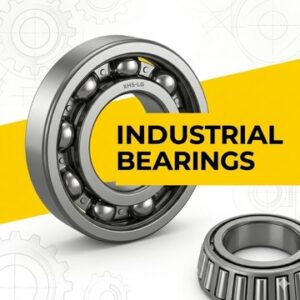
What Are Industrial Bearings?
Industrial bearings are mechanical additives designed to lessen friction among moving elements whilst supporting radial and axial loads. They allow rotational or linear motion while retaining alignment and balance.
Why Bearings Are Important in Machinery
- Reduce friction and heat generation
- Support rotating shafts and moving parts
- Improve machine efficiency
- Extend equipment lifespan
- Reduce maintenance costs
Industries inclusive of automobile, textile, mining, creation, and manufacturing depend upon excessive first rate bearings for non stop operation.
Main Types of Industrial Bearings
Different machines require specific bearing designs relying on load ability, velocity, and running situations.
1. Ball Bearings
Ball bearings are the most commonly used bearing type. They use rolling balls to maintain separation between bearing races.
Applications:
- Electric motors
- Pumps and fans
- Conveyor systems
- Household and light industrial machinery
Advantages:
- Low friction
- Suitable for high speed operations
- Cost effective solution
2. Roller Bearings
Roller bearings use cylindrical rollers instead of balls, allowing them to carry heavier loads.
Applications:
- Heavy machinery
- Industrial gearboxes
- Material handling equipment
Advantages:
- High load capacity
- Durable under heavy pressure
- Better shock resistance
3. Needle Bearings
Needle bearings contain long, skinny rollers that provide high load capacity inside a compact design.
Applications:
- Automotive transmissions
- Compressors
- Small industrial equipment
Advantages:
- Space-saving design
- High radial load support
4. Thrust Bearings
Thrust bearings are specifically designed to deal with axial loads.
Applications:
- Crane hooks
- Vertical shafts
- Automotive steering systems
Advantages:
- Handles axial force efficiently
- Improves rotational stability
5. Tapered Roller Bearings
Those bearings manipulate both radial and axial hundreds concurrently.
Applications:
- Truck wheel hubs
- Construction equipment
- Industrial transmissions
Advantages:
- High durability
- Suitable for combined loads
How to Choose the Right Bearing Type
Selecting the correct bearing depends on operational requirements.
Key Selection Factors
- Load type (radial or axial)
- Operating speed
- Temperature conditions
- Environment (dust, moisture, vibration)
- Maintenance requirements
Information these factors allows organizations avoid untimely bearing disasters and steeply priced downtime.
For a deeper understanding of supplier selection and quality evaluation, read our internal guide – Top Factors to Choose the Best Bearings Supplier in India
Applications of Industrial Bearings Across Industries
Automotive Industry
To guarantee smooth motion, bearings are utilized in steering assemblies, wheels, gearboxes, and engines.
Textile Industry
Precision bearings are necessary for high speed machines in order to preserve accuracy and minimize vibration.
Manufacturing and Automation
Where accuracy and robustness are essential, bearings support CNC machines, robotic arms, and conveyors.
Heavy Machinery
Mining and construction equipment depend on heavy-duty roller and tapered bearings for load handling.
Importance of Quality Bearings in Industrial Performance
Unexpected machine failures are decreased and operational reliability is increased by using high-quality bearings. Precision engineered bearings improve load distribution, reduce vibration, and lengthen the life of equipment.
Working with seasoned suppliers guarantees consistent supply availability, appropriate product selection, and access to technical guidance.
Maintenance Tips for Longer Bearing Life
Best Practices
- Use proper lubrication schedules
- Avoid contamination from dust and moisture
- Monitor vibration and temperature
- Install bearings correctly
- Replace worn components on time
Preventive maintenance lowers operating costs and greatly improves bearing efficiency..
Conclusion
Manufacturers can choose the best option for their equipment by being aware of the various kinds of industrial bearings. Every type of bearing has a distinct function, and selecting the right one has an immediate effect on machine performance, maintenance expenses, and operational effectiveness.
Before making a purchase, businesses should evaluate the supplier’s technical expertise and bearing type to ensure long term dependability.
For more updates, industry insights, and product information, follow us on Instagram.
Frequently Asked Questions (FAQs)
1. What are the main types of industrial bearings?
The main types of industrial bearings include ball bearings, roller bearings, needle bearings, thrust bearings, and tapered roller bearings. Each type is designed for specific load conditions, speed requirements, and industrial applications.
2. How do I choose the right bearing for my machinery?
Choosing the right bearing depends on factors such as load capacity, operating speed, temperature conditions, environment, and maintenance requirements. Selecting the correct bearing improves machine efficiency and prevents early failures.
3. Which industries commonly use industrial bearings?
Industrial bearings are widely used in automotive, textile, manufacturing, construction, mining, and automation industries where smooth rotation and load support are essential for machine performance.
4. What happens if the wrong type of bearing is used?
Using the wrong bearing type can cause excessive vibration, overheating, increased friction, and premature machine failure, leading to higher maintenance costs and production downtime.
5. How can industrial bearings last longer?
Proper lubrication, correct installation, regular inspection, and protection from dust or moisture help extend bearing life and maintain consistent machine performance.

Comments are closed.